
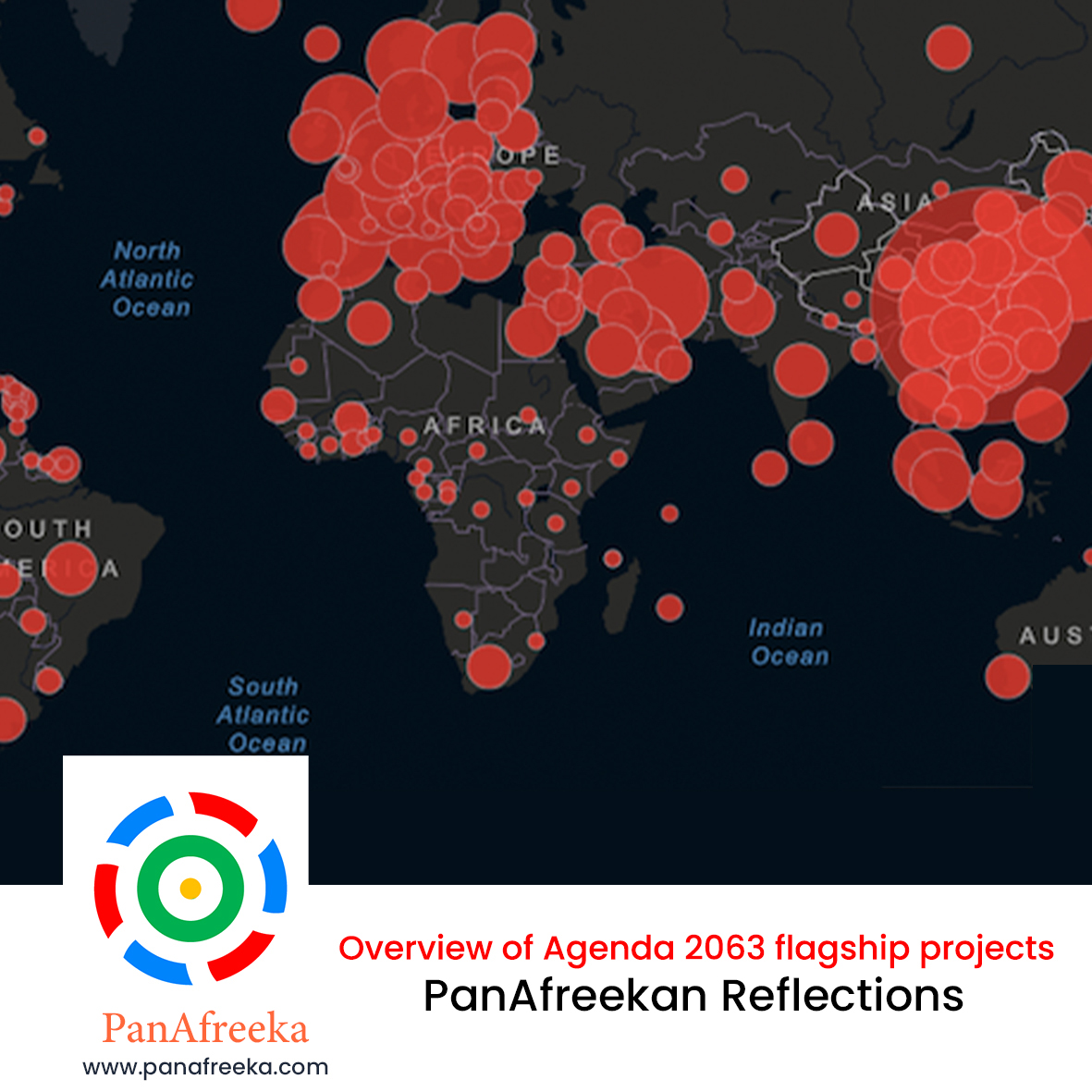
At the time of writing this, South Africa became the first African country to record over 1 million Covid 19 cumulative infections and have had to go back into a higher level of lockdown where amongst other things, you can go to jail for not wearing a mask (Welcome to 2021, where the term “fashion police” means much more than a bad outfit).
For many countries, this pandemic has really been a balancing act where the choice to save lives has at to be juggled alongside the need to save livelihoods, and sadly several countries around the world are going through in various degrees an economic recession and/or an healthcare system that is under pressure.
By saving lives, we are not just referring to the virus and the official statistics from the John Hopkins Centre, but there are numerous other people that are dealing with mental health issues as a result of the measures that governments have instituted to curtail the pandemic spread, many of whom have sadly taken their own lives.
On saving livelihoods, we do not seem to be doing much better, because there is just not enough money flowing through economies as did in the past and now several countries are in a recession. Most forecasts given on economies at the beginning of the national calendar year in the year 2020 typically by finance ministers are way off target.
As a side note, one of the questions we have been asked is why there is no flagship project for healthcare given the pandemic. To answer this we would like to refer to the African Continental Free Trade Area Agreement which contains amongst other sections protocols in Trade in goods as well as a protocol in trade in services. If executed well, these protocols can be used to facilitate intra African trade in healthcare related goods as well as health care related services.
Back to the impact of the pandemic, as we reflect on the above, one cannot help but wonder if the situation is going to get worse. In other words, what if this thing that is starting off as a recession evolves into the restructuring of an economic system? What if industries and entrepreneurs in the logic of self-preservation proceed to restructure their business model such that when the recession is over, most of the jobs that were lost during the pandemic will no longer exist or will exist in lower demand and given what we know from Economics 101, an oversupply of labour can result in a reduction in salaries and wages.
The world around us is changing but the thing about change is that it usually brings with it positive and negative factors, emotions and considerations. The timing of the commencement date of the African Continental Free Trade Area Agreement (AfCFTA) in the wake of a year where a pandemic pretty much shook the world is quite significant if not prophetic as it offers Africa a chance for Africans to not only view the opportunity to rebuild their economy, businesses or even careers through the lens of the post pandemic state of their individual countries but also through the lens of an entire continental market of over a billion people. It also allows for an African individual or juristic person to have an advantage (when it comes to trade) in Africa over the non-African counterpart.
Agenda 2063 flagship projects of which AfCFTA is a critical component offers a combination of vague and crystal opportunities. Some of these flagship projects seem farfetched, not because it’s impossible but because it’s considered by many to be impossible for Africans given our track record. This mindset however has to change within as many of us as possible. Agenda 2063 in conjunction with other African Union (AU) projects offers the opportunity of the development of an African economic system but it will need a transformation of our consciousness, behavior and human relations with fellow Africans to stand a chance.
The AfCFTA can no doubt help to boost intra-African trade, but it’s a market at the end of the day and dynamic market forces can be brutal and can result in winners and losers in the form of predominantly importing and exporting nations, predominantly producing and consuming nations etc. This is why we cannot leave these initiatives and projects in the hands of our politicians, many of whom have to balance their political ambitions against the kinds of interventions that these flagship projects may require. We need to educate ourselves and look for areas to get involved. If you are an African, you need to be well versed on what your local country (and/or Regional Economic Communities that your country may be part of) is/are doing concerning the AfCFTA, other Agenda 2063 projects as well as other AU projects that may be ongoing within your jurisdiction.
To outthink and outperform competition whether that competitor is your fellow local competition or a competitor from another African country or even a competitor from outside the continent that is looking to grab their share of a market of over a billion people requires lots and lots of strategy and execution. Strategic thinking and indepth understanding of dynamics of the different markets will be required at all levels from individuals like you our fellow panAfreekans all the way up to the local country leadership. Agenda 2063 will incentivise us with the removal of several tariff barriers to purchase “Made in Africa” goods (to be enforced by certificate of origin principle) over goods from other continents, however it will also require us to industrialise and industrialise fast. The African commodity strategy flagship project is great but no other continent has developed by relying on commodities alone.
The AfCFTA is knocking on the door, and may be our ticket out of the mass recession caused by a pandemic that we didn’t see coming but for it to have a chance, it requires our support. The political leaders can do their part alongside the AU but it is us the people that utilise the mechanisms that they will put in place and while its developments are expected to be slow at first, the rate at which it gathers momentum will also be driven by how much demand there is to ensure that the framework, resources and processes for the entire “Free trade chain” from the raw material producer in African country A to the delivery of the recently purchased finished product in State Party B is completed and consistently being improved upon.
We will continue to share our journey, learnings and observations with you, and maybe even some day partner with you to explore the possibilities on our continent in the form of our own mini initiatives and flagship projects that will help further the cause of creating the Africa we want.
For more information relating to the free trade area click the useful Links (UL) below:
- https://afcac.org/en/images/Documentation/yd_eng.pdf
- https://www.nepad.org/agenda-2063/flagship-project/african-commodity-strategy
- https://www.nepad.org/agenda-2063/flagship-project/african-continental-free-trade-area-afcfta
- https://www.questia.com/magazine/1G1-530107183/african-commodities-strategy-value-addition-for-global
- https://au.int/sites/default/files/newsevents/workingdocuments/33100-wd-6a-brochure_on_single_african_air_transport_market_english.pdf
- https://afcac.org/en/images/Documentation/yd_eng.pdf
- https://www.tralac.org/documents/resources/african-union/1506-the-single-african-air-transport-market-pida-brochure-2017/file.html
- https://au.int/sites/default/files/newsevents/workingdocuments/38223-wd-progress_report_on_the_implemenation_of_agenda_2063_eng.pdf
- https://au.int/en/treaties/african-union-convention-cyber-security-and-personal-data-protection
- https://pau-au.africa
- https://au.int/sites/default/files/treaties/36403-treaty-protocol_on_free_movement_of_persons_in_africa_e.pdf
interesting read indeed! Linking the current recession that most African countries are grappling with to taking advantage of AfCTA as one way out of this predicament.